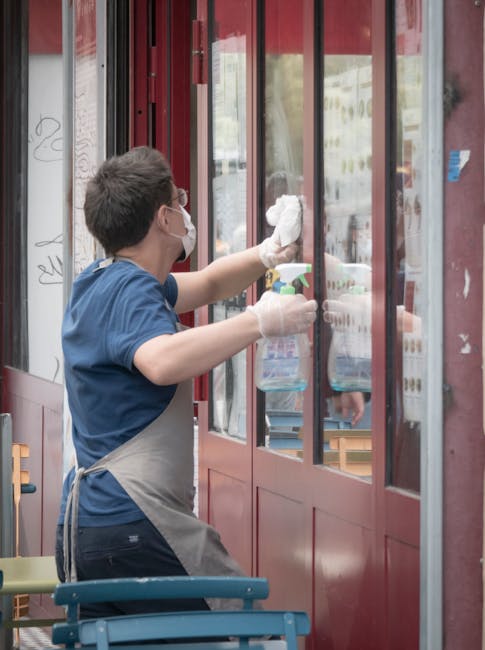
Office and shop cleaning Finsbury Park for local businesses

If you run a shop, office, studio, or small customer-facing premises in Finsbury Park, cleaning is never just a "nice to have". It affects first impressions, staff comfort, hygiene, and even how smoothly the day runs. Office and shop cleaning Finsbury Park for local businesses is really about keeping commercial spaces presentable, safe, and ready for work without becoming another thing on your already full plate.
That might mean daily upkeep, regular cleaning, or a deeper reset after a busy week, a refurbishment, or a rush period when the floors have taken a bit of a beating. Let's face it: crumbs appear, dust gathers, touchpoints get grubby, and the windows never stay clear for long. This guide breaks down how professional commercial cleaning works, what to expect, and how to choose the right approach for your premises in a way that actually saves time and stress.
Why Office and shop cleaning Finsbury Park for local businesses Matters
Cleaning in a commercial setting is not the same as cleaning at home. Offices and shops deal with more foot traffic, more shared surfaces, more varied mess, and more pressure to look "open for business" at all times. In a Finsbury Park shopfront, a dusty window or sticky floor can quietly turn people away before they even step inside. In an office, a neglected kitchen, dusty desk area, or overflowing bin can make staff feel like nobody's really in control.
There's also the reality of local trading. Finsbury Park businesses often work in busy, mixed-use environments where the pace is quick and space is tight. A cleaner, fresher workplace supports staff morale, reduces embarrassment when clients visit, and helps maintain a more professional rhythm throughout the week. You notice it immediately, even if visitors never mention it: the place simply feels better run.
For many businesses, cleaning also protects the things that are expensive to replace. Carpets, hard floors, upholstery, window glass, and fitted fixtures last longer when they are properly maintained. That is why commercial cleaning is not just about appearance. It is also about preservation, routine, and not letting small issues snowball into avoidable costs.
Where a business has customer-facing areas, cleaning becomes part of the brand. A spotless reception desk, clean fitting room mirror, or tidy till area tells people you care about detail. And in service businesses, details matter more than most owners would like to admit. One scuffed entrance step or one stale-smelling room can change a customer's mood in seconds.
How Office and shop cleaning Finsbury Park for local businesses Works
Good commercial cleaning starts with a simple question: what exactly needs to be cleaned, how often, and at what time of day? The answer changes depending on whether you manage a small office, a retail unit, a salon, a workshop office, or a shop with regular customer traffic.
Usually, the process begins with a walkthrough or a discussion of the space. That lets the cleaning team identify priority areas such as entrances, washrooms, kitchens, customer counters, staff areas, floors, glass, and touchpoints like handles and switches. If there are carpets or upholstered chairs, those may need extra attention through commercial carpet cleaning or upholstery cleaning.
From there, the clean is usually shaped around the business's operating hours. Some clients want a morning reset before opening. Others prefer evening cleaning after staff have left. A few need a flexible schedule because the space is constantly in use. There is no one right answer, which is helpful, because real businesses are rarely neat and tidy in the scheduling department.
The work itself may include dusting, vacuuming, mopping, sanitising touchpoints, emptying bins, cleaning glass, restoring washrooms, and dealing with marks or spills. For a more detailed refresh, a deep cleaning session can go further, targeting grime that builds up in corners, behind furniture, on skirting, or in less visible areas that regular cleaning does not always reach.
Some businesses also need specialist add-ons. For instance, window cleaning improves light and presentation, while hard floor cleaning can restore shine and remove embedded dirt that normal mopping leaves behind. If your premises include curtains, communal zones, or shared-access areas, services such as curtain cleaning and communal area cleaning may also fit neatly into the plan.
Key Benefits and Practical Advantages
The most obvious benefit is that the space looks and feels better. But the real value often sits underneath that. A clean office or shop runs more smoothly because people are not constantly reacting to clutter, dust, or small hygiene issues. The atmosphere becomes calmer. Less "where's that smell coming from?" and more "right, let's get on with it".
Here is the practical payoff in plain English:
- Better first impressions for customers, clients, and suppliers.
- Healthier work conditions through reduced dust and dirt buildup.
- Lower maintenance pressure on floors, carpets, furniture, and fittings.
- More consistent standards when cleaning happens on a regular schedule.
- Less disruption when cleaning is planned around your opening hours.
- Improved staff morale because people work better in a tidy environment.
There is also a financial angle. A well-maintained premises tends to avoid the grim spiral of "we'll sort it later" that often becomes more expensive later. A stained carpet may become a replacement job. A neglected hard floor may lose its finish. Dirty windows may make your whole frontage look tired, even if the rest of the business is doing well.
For businesses that host customers in person, cleaning is also part of trust-building. A neat environment suggests reliability, attention to detail, and respect for the people walking through the door. Those things are hard to quantify, but everyone notices them. Everyone.
Who This Is For and When It Makes Sense
Office and shop cleaning is not only for large companies with a reception area and a facilities manager. In fact, many of the most useful contracts are for small and medium local businesses that simply need dependable help keeping on top of the basics.
This kind of service makes sense if you run:
- an independent shop or boutique
- a small office or shared workspace
- a salon, clinic, or treatment room
- a cafe with a back-of-house staff area
- a showroom or display unit
- a mixed-use commercial property
- a premises with customer toilets or kitchen facilities
It also makes sense when business patterns change. For example, after a busy trading season, a summer rush, or a period with more visitors than usual, a one-off or deeper clean can bring everything back under control. Some businesses use one-off cleaning when things have drifted a little, while others prefer regular cleaning so the space never reaches that point in the first place.
If you have recently finished building works, shop fitting, or a refurbishment, the right move may be after builders cleaning. That is a very different job from routine cleaning, because dust gets everywhere. Into vents, around skirting, on ledges, somehow even inside places you were sure were sealed. A bit annoying, truth be told.
And if your business is moving premises, fitting out a new unit, or handing back an old one, services such as move-in cleaning and move-out cleaning can save a lot of headache during an already hectic period.
Step-by-Step Guidance
If you are thinking about arranging commercial cleaning in Finsbury Park, this is the simplest way to approach it without overcomplicating things.
- Walk the space properly. Note the busiest areas, the dirtiest surfaces, and the parts customers actually see first.
- Separate daily needs from occasional needs. For example, bins and touchpoints may need constant attention, while windows and carpets may only need periodic work.
- Decide on priorities. Customer-facing zones, washrooms, and entrance areas usually come first. Staff kitchens often come next. No surprises there.
- Choose the right frequency. A shop with heavy footfall may need more frequent attention than a quiet office. Keep it realistic.
- Build in specialist tasks. Add carpet care, floor restoration, stain removal, or glass cleaning where needed.
- Set access and timing rules. Early morning, evenings, keys, alarms, security procedures, and storage all need to be clear.
- Review after the first clean. Check whether standards, timing, and scope match what you expected.
One useful habit is to write down what "clean enough" actually means for your business. That sounds obvious, but it helps. A fashion shop may need spotless mirrors and dust-free rails. A small office may care more about bins, desks, washrooms, and the staff kitchen. If the expectations are vague, the results often become vague too.
When a business has fabric seating or high-traffic carpets, it is worth planning specialist care in advance rather than waiting for visible wear. Pairing routine cleaning with carpet cleaning, steam carpet cleaning, or rug cleaning can help keep the interior looking much fresher for longer.
Expert Tips for Better Results
The best cleaning results usually come from consistency, not drama. Not every problem needs a heroic rescue. Most need a tidy, repeatable routine and a team that notices the small stuff before it becomes a bigger issue.
A few practical tips that genuinely help:
- Place mats at entrances so less dirt reaches the floor in the first place.
- Keep cleaning supplies and consumables in one agreed location.
- Use different attention levels for high-touch and low-touch zones.
- Book periodic deep cleans instead of waiting for visible buildup.
- Flag problem spots early, especially around tills, door handles, kitchen areas, and toilets.
- Make sure floor care matches the material. A hard floor needs a different approach from carpet, naturally.
If your shop or office has stubborn marks, it helps to treat them quickly. Waiting rarely improves things. For item-specific issues, services like stain removal or pet stain odour removal can be useful in the right setting, while oven cleaning may matter for businesses with a kitchen, cafe back area, or staff cooking space.
Another tip: do not let presentation jobs become "someone else will sort it". That is how dust on windows, fingerprints on glass, and scuffed floors quietly start making the whole place look tired. Small fixes are easier than big resets. Much easier.
Common Mistakes to Avoid
One of the biggest mistakes is buying cleaning based only on price. Cheap cleaning can be expensive if it is rushed, inconsistent, or leaves the same problems untouched week after week. A better approach is to ask what is included, how standards are checked, and whether the service can adapt when your business changes.
Another common mistake is forgetting about the "invisible" parts of the space. Everyone notices the shop floor, but not everyone checks behind counters, along skirting boards, under chairs, or inside shared kitchen spaces. Those neglected areas build up quietly until the whole room feels off.
Here are a few other missteps worth avoiding:
- not defining responsibilities clearly
- ignoring specialist surfaces like wood, stone, vinyl, or tiled floors
- skipping glass and frontage care
- treating deep cleaning as a one-time luxury instead of occasional maintenance
- failing to update the cleaning plan when the business gets busier
- not planning for access, alarms, and security properly
It is also unhelpful to ask for "a general clean" and leave it there. General is fine as a starting point, but the best results come when you name the rooms, surfaces, and priorities. A bit of detail up front saves a lot of back-and-forth later.
Tools, Resources and Recommendations
You do not need to become a cleaning equipment expert to manage your premises well, but it helps to understand the basics. In a commercial setting, the right tools often make the difference between a tidy finish and a half-finished one.
Common equipment and service types used in office and shop cleaning may include:
- vacuum cleaners suitable for commercial floors
- microfibre cloths for dust and touchpoints
- neutral floor care products for sensitive finishes
- mops and pads matched to hard floor types
- glass cleaning equipment for internal and external panes
- specialist carpet care methods such as extraction or steam-based cleaning
Some spaces need a broader mix of services than others. For example, a shop with outdoor frontage might benefit from patio cleaning near the entrance area, while a business with smoked-in fabrics, heavy wear, or old upholstery may want sofa cleaning or mattress cleaning in a hospitality or staff accommodation setting.
For businesses aiming to reduce waste and improve routines, recycling and sustainability thinking can shape how supplies are used, stored, and replaced. That does not need to be grand or preachy. Often it just means using only what you need, handling waste properly, and avoiding unnecessary waste. Nice and simple, really.
Practical recommendation: keep a short written cleaning spec for your premises. Even a one-page list of rooms, surfaces, frequencies, and "must not miss" items can dramatically improve consistency.
Law, Compliance, Standards, and Best Practice
For commercial premises in the UK, the main point is not to turn cleaning into a legal puzzle. It is to make sure your premises are managed in a way that is safe, sensible, and consistent with your responsibilities as a business owner or occupier. That usually means paying attention to risk, access, hygiene, and the working environment.
Good practice often includes:
- clear arrangements for access, alarms, keys, and confidentiality
- safe storage and use of cleaning products
- attention to slip risks on wet floors
- regular review of higher-risk areas such as kitchens and washrooms
- documented expectations for cleaning and reporting issues
If cleaners are working in your premises, it is reasonable to expect proper insurance and safety awareness. You can review the provider's approach to insurance and safety and their health and safety policy. Those pages matter because they help you understand how risks are handled in practice, not just in theory.
You may also want to review a company's terms and conditions, privacy policy, and payment and security information if you are setting up an ongoing business arrangement. For larger or more formal contracts, that sort of admin detail is not glamorous, but it saves surprises later. And surprises are rarely fun when they involve invoices.
Trust is also shaped by how a business treats complaints and accessibility. If those matters are important to your procurement process, you may find the company's complaints procedure and accessibility statement useful. They show how carefully the business thinks about service, communication, and user needs.
Options, Methods, and Comparison Table
Different premises need different cleaning styles. A weekly light refresh may be enough for a small office, while a busy retail unit often needs a more structured plan. In between sits the common reality: a mix of regular cleaning and occasional specialist work.
| Approach | Best for | Strengths | Watch-outs |
|---|---|---|---|
| Regular cleaning | Offices and shops with ongoing footfall | Keeps standards stable, prevents buildup, easy to schedule | May not remove deeper embedded dirt on its own |
| One-off cleaning | Post-event, seasonal reset, or catch-up work | Fast way to restore order and presentation | Needs follow-up to keep results going |
| Deep cleaning | Premises needing a fuller refresh | Reaches less visible grime and neglected areas | Usually takes longer and is more intensive |
| Specialist add-ons | Floors, carpets, windows, fabrics, stains | Targets high-impact problem areas | Works best when matched to the right surface |
In practice, many businesses use a combination. For instance, a small office may rely on regular cleaning for the core routine, add window cleaning for presentation, and book deep cleaning when the space needs a more noticeable reset. That layered approach often works better than trying to force one method to do everything.
Case Study or Real-World Example
Here is a realistic example. A small independent shop in Finsbury Park had a front area that looked fine at opening time, but by late afternoon the floor near the entrance was marked, the glass had fingerprints, and the back staff area was starting to feel cluttered. Nothing dramatic. Just enough to dull the space.
The business first introduced a regular cleaning schedule focused on the entrance, customer path, bins, toilets, and staff kitchenette. After that, they added periodic hard floor cleaning because the entrance surface was losing its finish faster than expected. They also booked a one-off deeper visit before a seasonal promotion, when footfall was likely to increase.
The result was not some magical transformation. It was more practical than that. Staff spent less time worrying about the state of the shop, customers had a cleaner first impression, and the owner stopped feeling like the place was "just a bit behind" all the time. Small changes, but they add up. Especially in a busy area where people notice things quickly.
That is often the real value of commercial cleaning: it turns constant low-level maintenance stress into a routine you can trust. Which, to be fair, is a pretty good outcome.
Practical Checklist
Use this checklist before you set up or review cleaning for your office or shop.
- Have you listed all customer-facing and staff-only areas?
- Do you know which surfaces need daily, weekly, or occasional attention?
- Have you identified floors, carpets, glass, and fabric items that need specialist care?
- Are access times, alarms, and keys clearly agreed?
- Is there a written cleaning scope or priority list?
- Do you know how problems or missed tasks will be reported?
- Have you planned for one-off deep cleans when needed?
- Are safety, insurance, and terms clear before work begins?
- Have you considered sustainability and waste handling?
- Does the cleaning plan match the way your business actually operates?
Expert summary: the best commercial cleaning plan is the one you can keep doing. Reliable, realistic, and built around your opening hours beats an overambitious setup that falls apart after two weeks.
Conclusion
Office and shop cleaning Finsbury Park for local businesses is about more than keeping surfaces tidy. It supports your brand, protects your premises, and makes day-to-day work feel easier. Whether you need ongoing maintenance, a deeper refresh, or targeted help with floors, glass, carpets, or high-traffic areas, the right plan should feel practical and calm, not complicated.
The smartest approach is usually simple: define what matters, choose the right frequency, add specialist cleaning where it makes sense, and review the results before problems build up. That way, your space stays ready for customers and staff without stealing your attention every week.
If you are ready to improve your premises and take a bit of pressure off your team, the next step is straightforward.
Get a free quote today and see how much you can save.
Frequently Asked Questions
What does office and shop cleaning usually include?
It usually includes dusting, vacuuming, mopping, waste removal, cleaning touchpoints, washroom cleaning, kitchen or staff-area upkeep, and general presentation work. Some businesses also add windows, carpets, or floor care.
How often should a small business in Finsbury Park book cleaning?
That depends on footfall and the type of premises. A quiet office may only need weekly support, while a busy shop or customer-facing space often needs cleaning several times a week or daily attention in key areas.
Is regular cleaning better than one-off cleaning?
For most businesses, regular cleaning is better for keeping standards stable. One-off cleaning is useful for catch-up work, seasonal resets, or post-event recovery, but it does not replace a routine.
Do I need deep cleaning if I already have regular cleaning?
Sometimes, yes. Regular cleaning keeps visible areas in order, while deep cleaning deals with built-up dirt, neglected corners, and more intensive refresh jobs. The two often work best together.
Can commercial cleaning be done outside opening hours?
Usually, yes. Many businesses prefer early morning, evening, or weekend cleaning so staff and customers are not disrupted. Timing should always be agreed in advance.
What should I look for in a cleaning provider?
Look for clear communication, a sensible cleaning scope, proper insurance and safety awareness, and a service style that matches your business. Reliability matters more than flashy promises.
Are carpet and floor treatments worth it for shops and offices?
Often, yes. Carpets, rugs, and hard floors take a lot of wear in commercial spaces. Specialist care can improve appearance and help extend the life of those surfaces.
What if my business has stubborn stains or odours?
Then you may need targeted treatment rather than routine cleaning alone. Stain-focused services can help, especially where spills, high traffic, or fabric furnishings are involved.
How do I prepare my premises for a cleaner?
Keep access clear, store sensitive items safely, identify priority areas, and let the cleaning team know about alarms, keys, or any special instructions. A short written brief helps a lot.
Is commercial cleaning different from domestic cleaning?
Yes. Commercial cleaning deals with business use, customer presentation, higher footfall, and often different timing needs. It also tends to require more consistency and clearer reporting.
What if I only need help with one part of the premises?
That is common. You might only need windows, carpets, floors, or a deep clean for one area. A good plan can be narrow and focused rather than trying to cover everything.
Does sustainability matter in office and shop cleaning?
It can. Using supplies sensibly, reducing waste, and choosing a practical routine all help. It does not need to be complicated. Small, steady improvements are often enough.